
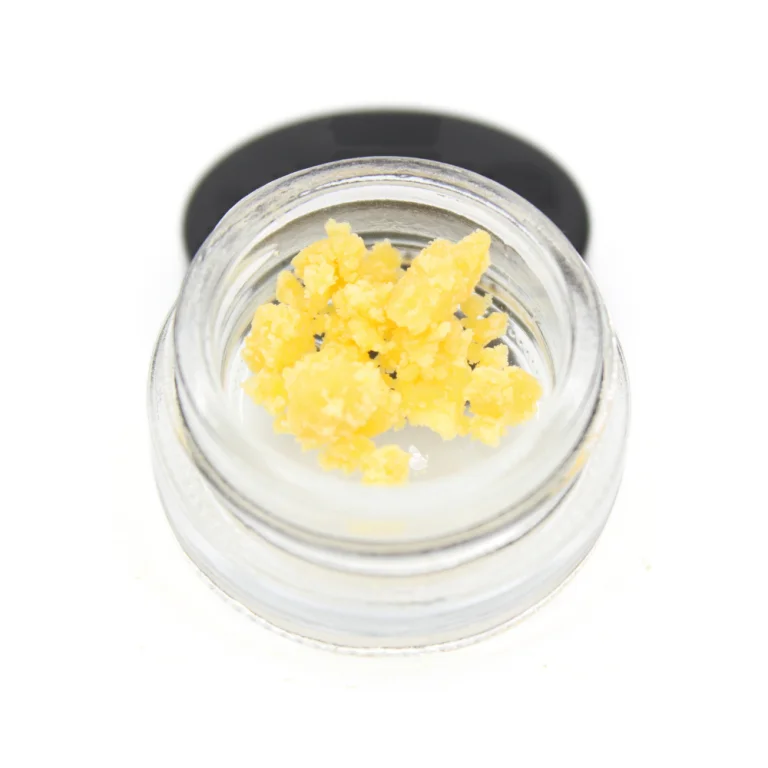
Purple Haze may be the most famous strain name in cannabis, thanks in large part to the Jimi Hendrix song it shares a name with. The strain has a long-standing reputation as a sweet, berry-scented, creative sativa, and it still shows up on menus as flower, vapes and concentrates. Because so many producers have used the name over the decades, though, not every “Purple Haze” product is the same. This guide covers its history, terpenes, effects and strength, how to read a Purple Haze label, and what we carry right now.
Purple Haze at a glance
| Detail | What is commonly reported |
|---|---|
| Type | Classic versions are sativa-dominant hybrids |
| Commonly cited lineage | Purple Thai x Haze |
| Main terpenes | Myrcene, caryophyllene, limonene |
| Aroma | Sweet earthy berry, with spice when the bud is broken up |
| Flavour | Sweet, fruity berry and grape with a hint of spice |
| Commonly reported THC | About 14% to 21% in flower; much higher in concentrates |
| Typical time of day | Daytime and creative sessions |
The history behind the name
“Purple Haze” was a 1967 single by the Jimi Hendrix Experience, and the strain name nods to it. Much of the strain’s own early history has been lost over time, and there are several competing origin stories. The general consensus is that Purple Haze descends from a Purple Thai crossed with a Haze. Haze strains are known for an energetic, heady effect, and the Purple Thai side is credited with the berry sweetness and the purple hues that some phenotypes show.
Not every Purple Haze bud is purple. Colour depends on the phenotype and growing conditions, especially cool night temperatures late in flowering. It has nothing to do with potency, and plenty of excellent Purple Haze is plain green with orange hairs.
Purple Haze terpenes
Lab data aggregated by major strain databases lists these as the most common terpenes in Purple Haze:
| Terpene | What it smells like | What it adds |
|---|---|---|
| Myrcene | Earthy, herbal, musky | The earthy base under the berry, and the musty note people notice when grinding the bud |
| Caryophyllene | Black pepper and spice | The hint of spice on the finish |
| Limonene | Citrus peel | A brighter, fresher edge that lifts the sweet fruit |
Together these explain the classic description: sweet berry on top, earth in the middle, a touch of spice at the end.
Is Purple Haze a sativa or an indica?
Classic Purple Haze is described as sativa-dominant. That said, the name is used by many producers, and their labels do not always match the classic profile. A good example is the Purple Haze sugar wax on our menu: its producer labels it indica-dominant (90% indica / 10% sativa). When a label and a strain’s reputation disagree, trust the product page for the batch you are buying, and expect the effects to follow that batch rather than the name.
What does Purple Haze feel like?
For classic, sativa-leaning Purple Haze, users typically report:
- A happy, energetic lift that comes on quickly.
- Creativity and engagement, which is why it has long been popular with musicians, writers and artists. Some people describe getting absorbed in music, reading or a project.
- A dreamy, almost psychedelic edge at higher doses, which some people enjoy and others find too much.
- A gentle body buzz that grows as the session goes on, without heavy couch-lock.
- Racing thoughts in large doses for some people, as with many Haze strains.
Indica-leaning versions, like our sugar wax, are more often described as happy and creative at first, then settling into a warm, mild body feel.
Purple Haze and the wider Haze family
“Haze” is one of the oldest family names in cannabis. Haze strains are known for sativa-heavy genetics, long flowering times, and an energetic, heady effect, which is why so many classic daytime strains carry the name. Purple Haze is one branch of that family. Here is how it compares with other Haze names you may see on menus:
| Strain | Commonly reported profile | How it differs from Purple Haze |
|---|---|---|
| Purple Haze | Sweet berry and earth with spice; creative and upbeat | The sweetest and most fruit-forward of the classic Hazes |
| Super Silver Haze | Citrus, skunk and spice; very energetic | Sharper and more citrusy, usually a bit stronger |
| Amnesia Haze | Lemon, earth and incense; strong head high | More intense and lemony, with less berry sweetness |
| Tangerine Haze | Zesty tangerine with a sweet, floral finish | Citrus instead of berry; our LUSH version is listed at 60% sativa / 40% indica |
| Jack Herer | Commonly described as earthy pine with spice | A commonly reported Haze descendant; ours is sold as House Shatter, listed at 23 percent THC |
If you enjoy Purple Haze, the other Hazes are a natural next step. If Haze strains tend to make you feel racy, stick to small amounts or look for an indica-leaning label.
What to look for in good Purple Haze
- Aroma first. Good Purple Haze should smell clearly of sweet berry and earth as soon as you open the container. A flat, hay-like smell usually means old or poorly cured product.
- Frost. Flower should be covered in trichomes. Concentrates should look clean and consistent in texture.
- Clear labelling. Look for the strain type and THC on the product page, especially with a name this widely used.
How strong is Purple Haze?
Flower is commonly reported at about 14% to 21% THC, depending on the source. That is moderate by today’s standards, and part of why it has stayed popular as a daytime strain: it is lively without being overwhelming. Concentrates are a different story. Our Purple Haze Sugar Wax lists 26% THC in its strain information, and as a concentrate, a small dab goes a long way. Start smaller than you would with flower.
Is Purple Haze any good?
It depends on what you want. If you are after a sweet, berry-scented strain with an upbeat, creative feel, classic Purple Haze is a reliable choice with a long track record. If you want record-breaking potency or a heavy nighttime high, newer strains will suit you better. Many people choose Purple Haze precisely because it is fun and manageable rather than knock-out strong.
What we carry: Purple Haze and Haze options in stock
Here is what is on our menu right now, based on each product page:
| Product | Format | Size | Listed THC / type | Flavour and notes |
|---|---|---|---|---|
| Sugar Wax: Purple Haze | Sugar wax concentrate | 1 g or 2 g | 26% THC; indica-dominant 90/10 | Sweet, earthy berry; berry taste with a little spice |
| House Shatter (current strains) | Shatter concentrate | Varies by product | Listed on each product page | Glassy shatter; check the current strain list |
| LUSH Tangerine Haze | Disposable vape | 2 ml (1800 mg THC) | Strain listed at 16% to 21%; 60% sativa / 40% indica | Zesty tangerine, sweet floral finish; recharges by USB |
Sugar wax, shatter or vape: which fits you?
- Sugar wax has a grainy, sugary texture that is easy to scoop and less sticky than many concentrates. It is a good choice for dabbing or topping a bowl.
- Shatter is glassy and brittle, so it snaps into small, easy-to-portion pieces. It suits people who already use concentrates.
- A disposable vape needs no gear at all and is the most discreet option. Flavour comes from terpenes blended into the oil.
Browse all of our wax concentrates for more strains in the same format.
How to use sugar wax
- Dab rig or e-rig. The most common way. Scoop a rice-grain-sized amount with a dab tool and dab at a low to medium temperature to keep the berry flavour.
- Topping a bowl or joint. Sprinkle a small amount on top of flower in a bowl, or roll a thin strand into the middle of a joint, to boost both flavour and strength.
- Concentrate vape. Some portable vaporizers are made for wax. Check that yours is designed for concentrates before loading it.
If you are new to smoking or concentrates, start with our beginner’s guide to smoking.
Similar strains we carry
- House Shatter: Jack Herer and LUSH Tangerine Haze, above, keep you in the Haze family.
- Dutch Dragon (AAAA): a sativa-leaning hybrid (75 percent sativa / 25 percent indica, listed at 20 to 24 percent THC) with a sweet and sour tropical citrus taste and a giggly, social feel.
- Divine Mints (AAAA): a sativa-leaning hybrid (70 percent sativa, listed at 20 to 25 percent THC) with a creamy lemon and mint taste.
How to store Purple Haze
- Wax and shatter: keep them in the original jar with the lid tight, away from heat and light. Warm concentrates get sticky and lose terpenes faster.
- Flower: use an airtight glass jar in a cool, dark place. Avoid plastic bags, which can crush trichomes.
- Vapes: store upright at room temperature, out of hot cars.
Get Purple Haze delivered
Get Green offers same-day weed delivery in Vancouver and across Metro Vancouver, 12 PM to 8 PM daily. Delivery is free in Vancouver and Richmond on orders of $60 or more, usually within 1 to 2 hours; other zones have their own minimums. Pay the driver with cash or e-Transfer. Outside Metro Vancouver, we ship across Canada by Express Post in 1 to 3 business days, free over $99 and $25 flat below that. You must be 19 or older and verify your age with one piece of government-issued ID.
FAQ
Is Purple Haze a sativa or an indica?
Classic Purple Haze is sativa-dominant. Some products sold under the name are labelled differently; our sugar wax, for example, is labelled indica-dominant. Check the product page for the batch you buy.
How strong is Purple Haze?
Flower is commonly reported at about 14% to 21% THC. Our Purple Haze sugar wax lists 26% THC in its strain information.
Is Purple Haze any good?
It is a well-loved classic with a sweet berry flavour and a creative, upbeat reputation, and a good pick if you want something lively but manageable.
What does Purple Haze taste like?
Sweet, fruity berry and grape with an earthy base and a hint of spice on the finish.
Is Purple Haze always purple?
No. Purple colour depends on the phenotype and growing conditions and has nothing to do with strength.
Why is it called Purple Haze?
The name nods to the 1967 Jimi Hendrix song and to the strain’s Purple Thai and Haze genetics.